
Trading the DE40? Expert Predictions for the German Economy
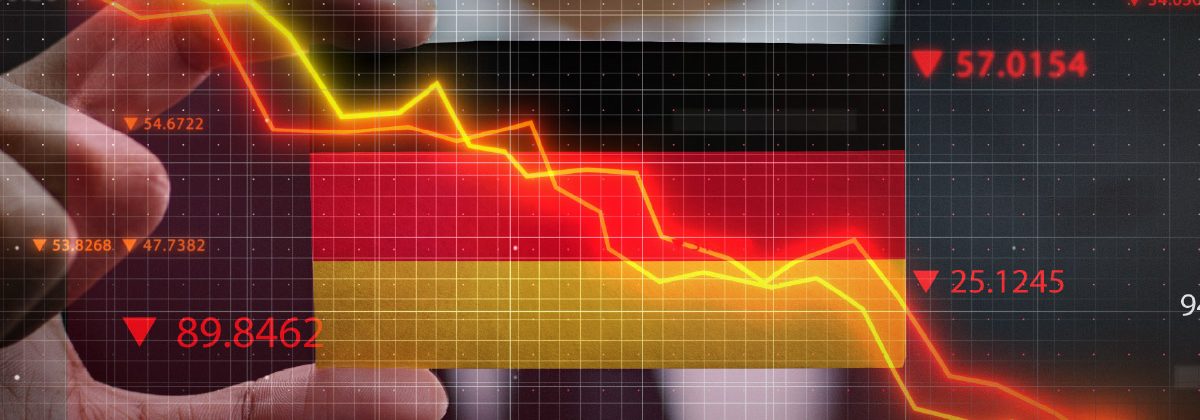
The German economy is set to grow in the latter half of 2025 and in 2026, after two consecutive years of contraction. The real GDP growth of the world’s third-largest economy declined by 0.3% in 2023 and 0.2% in 2024. Analysts at Goldman Sachs expect Germany’s GDP growth to remain modest at 0.3% in 2025, while projecting that the growth would rise by 1.4% and 1.8% in 2026 and 2027, respectively. Understanding what has changed can be instrumental in making informed decisions while trading the DE40 index.
Why Did the German Economy Decline?
Following the 2022 energy crisis, Germany’s economic growth declined due to several factors.
Loss of Automotive Share
Germany’s GDP had long depended on the export industry, especially automobiles. As competition intensified in the EV segment, in a bid to meet the UN’s SDG targets for 2030, Germany lost market share to China and the US. The two largest economies used accelerated innovation and domestic production incentives, which German automakers lacked, leading to reduced export demand for the European nation.
High Energy Costs
The energy crisis following the start of Russia–Ukraine conflict sharply increased electricity and gas prices in Germany, directly affecting energy-intensive sectors such as chemicals, machinery and manufacturing. Companies’ profit margins shrank, and some even had to halt production. Weakening overall industrial output shook the backbone of the German economy. This also led to job losses, driving the unemployment rate up.
Weak Domestic Demand
High inflation and elevated interest rates eroded household purchasing power. Sluggish consumer spending and delayed corporate investments, amid tight financial conditions, policy uncertainty and weaker global demand, weighed on the country’s growth.
Supply Chain Realignment
Germany’s export-heavy model took a hit as global trade volumes slowed while supply chains realigned. Regional production and friend-shoring strategies lowered Chinese demand and slowed US imports, further hurting the manufacturing sector.
Structural and Demographic Challenges
Germany’s attractiveness nearly halved in 2024 from its 2022 score, according to the KPMG Location Index. Long-term issues, such as an aging workforce, shortage of skilled labour and slow digitalisation, hurt productivity and innovation. Bureaucratic hurdles and a cautious investment climate made it harder for German companies to adapt to changing global trends. Foreign investors also consider excessive bureaucracy, untamed energy costs and a lack of digitisation at scale as the most significant hurdles, despite the country’s favourable location, high standard of living and public safety.
The German Economy is Heating Up
Several key developments are shaping an improved outlook for the German economy. Its transition from stagnation to meaningful growth can create more opportunities for trading the DE40.
Major Fiscal Stimulus and Investment Push
The government has committed to a massive infrastructure and defence investment programme. An extra funding of €500 billion has been issued to support this initiative to fast-track planning and licensing.
Strengthening Domestic Demand
Policy-driven boosts to household income, stable price pressures and investment in public services may fuel consumer confidence. Analysts expect domestic consumption and investment to drive growth.
Energy and Cost Relief
Although energy costs remain elevated relative to its EU peers, easing pressures and institutional reforms may reduce network and system charges in Germany. This can boost the competitiveness of the nation’s manufacturing industry.
Potential Structural Reforms
Plans to reduce red tape, attract more skilled labour (including targeted immigration) and diversify the economy into higher-growth tech and service sectors are gaining traction. These may create abundant opportunities in the long term, granting productivity an upside.
Trading the DE40: What to Watch
The DE40 stock index grew sharply in April 2025 due to strong corporate earnings reports, expectations of interest rate cuts by the European Central Bank (ECB), and a general trend of capital rotation into undervalued European equities from the US markets. The index had risen almost 20% YTD by the first week of November. Keeping an eye on the key factors that impact the index is crucial to making informed trading decisions:
Corporate Earnings and Sectoral Performance
The DE40 is a free-float market capitalisation-weighted index. Companies with larger market caps, adjusted for shares, have a greater influence on the index’s movements. These include Siemens, SAP, Allianz and Volkswagen. For instance, in April 2025, SAP’s Q1 earnings beat analyst expectations, pushing its stock price 10% higher in a single day and driving the DE40 up with it.
ECB Interest Rate Decision
Germany is the largest EU economy. The ECB’s monetary stance is one of the strongest drivers of the DE40. Anticipation of rate cuts can lift sentiment by lowering borrowing costs and stimulating spending. This tends to drive stock market rallies. Monetary tightening pressures equities, particularly in rate-sensitive sectors like real estate and banking.
Economic Data and Industrial Activity
Key economic indicators, such as PMI, industrial production and export orders, provide real-time insight into Germany’s economic health. A rebound in manufacturing and export demand often signals upside momentum, while contracting PMIs or soft export data dampens investor confidence, often leading to sell offs.
Energy Prices and Input Costs
Energy costs have a strong influence on manufacturing profits. Fluctuations in natural gas and electricity costs impact profit margins across German industries. Sustained relief in energy prices may support growth sectors, while price spikes could reignite inflation concerns and limit index gains.
Global Revenue Streams
Many large German companies in the DE40 generate a significant part of their revenue internationally. This makes the index highly sensitive to global trade conditions and geopolitical developments. Improvements in trade relations, stronger overseas demand and global fiscal stimulus can fuel rallies, while supply-chain disruptions or tariff risks weigh on investor sentiment.
To Sum Up
- The German economy is expected to expand moderately in 2025 and 2026, after two consecutive years of contraction.
- High energy costs, softer domestic and export demand, and structural challenges weighed on the country’s manufacturing sector.
- Domestic and global forecasts suggest that the German economy is on track for a period of sustained, though moderate growth.
- Monitoring the ECB’s interest rate decisions, government investment in infrastructure building, corporate earnings reports, and export orders is crucial to making informed DE40 index trading decisions.
Disclaimer:
All data, information and materials are published and provided “as is” solely for informational purposes only, and is not intended nor should be considered, in any way, as investment advice, recommendations, and/or suggestions for performing any actions with financial instruments. The information and opinions presented do not take into account any particular individual’s investment objectives, financial situation or needs, and hence does not constitute as an advice or a recommendation with respect to any investment product. All investors should seek advice from certified financial advisors based on their unique situation before making any investment decisions in accordance to their personal risk appetite. Blackwell Global endeavours to ensure that the information provided is complete and correct, but make no representation as to the actuality, accuracy or completeness of the information. Information, data and opinions may change without notice and Blackwell Global is not obliged to update on the changes. The opinions and views expressed are solely those of the authors and analysts and do not necessarily represent that of Blackwell Global or its management, shareholders, and affiliates. Any projections or views of the market provided may not prove to be accurate. Past performance is not necessarily an indicative of future performance. Blackwell Global assumes no liability for any loss arising directly or indirectly from use of or reliance on such information here in contained. Reproduction of this information, in whole or in part, is not permitted.