
How AI is Changing the Way We Trade
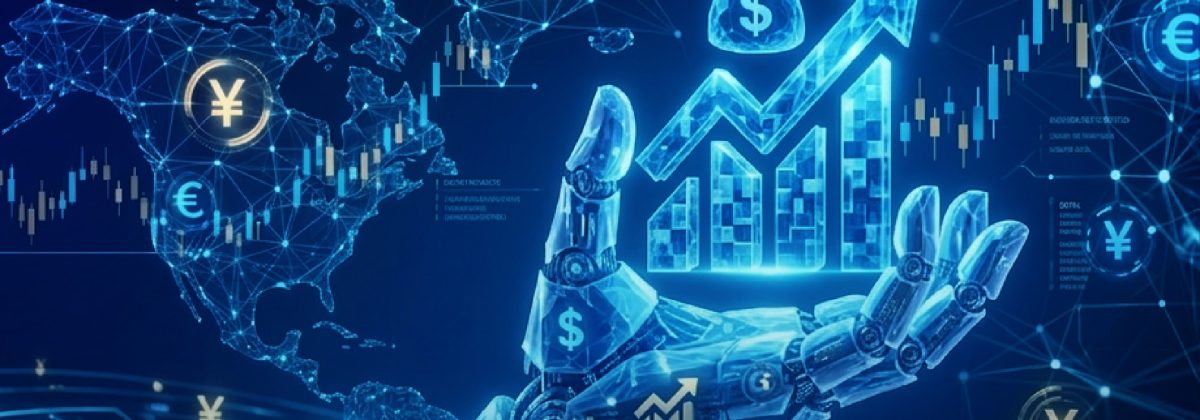
The financial markets are a battleground for speed and accuracy. You blink and the opportunity is gone. With AI seeping into the trading ecosystem, both precision and trading speed have improved exponentially. That explains why the global market for AI trading platforms is projected to reach $33.45 billion by 2030. If you aren’t yet harnessing the power of this technology for your trading strategy, you are competing against supersonic jets with a horse cart.
Evolution from Rules to Dynamic Algorithms
In the past, trading algorithms meant a fixed set of if-then rules. This has changed with AI trading. Advanced systems aren’t static anymore; they learn from data and evolve as the market changes. ML-powered analytics help AI identify patterns that might escape the human eye. Automated forex trading means zero emotional interference and almost reflexive responses to market updates. By using neural networks, AI systems can speculate at a much faster pace and with greater accuracy by analysing short-term price movements and market sentiment, while accounting for anomalies. Retail quantitative trading has embraced AI tools to make trading experiences that were traditionally reserved for Wall Street accessible to all traders.
Engine Moves Faster than Muscle
A human day trader can only place one trade in about a minute after spending minutes to hours on research. AI pulls thousands of datasets, including price, volume, sentiment and news, tracks them simultaneously, and identifies multiple possible positions that a trader simply approves or rejects.
Machine Eliminates Human Error
Work stress, distractions, or just the need to get that “kick” of opening a position often leads to errors and impulsive decisions. Small errors in pip calculations can affect your trading decisions massively. Automated calculators do not make such errors.
Machines Don’t Get Tired
The human brain gets fatigued after a period of analysis and decision making. But AI never does, which keeps the assessment battery at 100%. That means you can even automate for markets that open while you sleep without losing out on opportunities.
Harnessing the Power of AI for Trading
There’s no doubt that leaving your hard-earned money in the hands of a machine seems like losing control. What if there was a way out to keep the control while making the most of what AI offers in trading?
Move from Backtesting to Forward Testing
Traditionally, you would test a trading strategy on past data. This often leads to overfitting. Due to this, a strategy that worked earlier becomes ineffective in the current market conditions. AI allows you to forward test the strategy. Walk-forward testing optimises the data using current market conditions and various factors that may influence price moves in the near future. This helps you test the strategy with a variety of possible scenarios. This kind of testing proves or disproves your strategy for new market scenarios and allows you to test flexibility with historical data.
Automate the Grind
In case you do not want to fully automate your trading decisions and hand over control to a bot, use AI to take care of time-consuming activities. For instance, set trackers that will alert you when a specific setup occurs. Let’s say you want to take advantage of a market reversal and expect a head-and-shoulders pattern to complete. Instead of watching the market continuously, you can simply set an alert for when the pattern is completed and choose to enter manually after the AI-engine confirms the reversal. This way your mental energy isn’t consumed by waiting for the pattern to complete.
Utilise Sentiment Analysis
Every news event has the potential to move the markets. AI can monitor a variety of channels, news headlines, social media chatter and more to determine sentiment shifts. NLP-driven intelligent algorithms collate sentiment information with trading volume to identify early signals of a trend reversal or a breakout. This helps you identify emerging trading opportunities early and prepare to enter without losing any time.
Learn How to Evaluate Trading Bots
The market is overflowing with AI bots and their promises of high returns. But there’s a trust deficit amongst experienced trader and for good reason. Here’s what you should look for when choosing an AI bot:
Customisations
The tool should allow you to customise the trading strategy, risk tolerance levels, and when you want the bot to make a trade independently and when it should confirm from you.
Verified Track Record
Your broker would usually provide the track record, drawdown levels, and other essential data about the AI bot.
No Black-boxing
AI trading with explainable decisions ensures that you know the why behind every action. From logic logs to confidence scores, transparency in everything is crucial.
Safety Toggles
You should have enough control to switch off everything if needed. AI can struggle with black swan events, which is where you need manual overridability. You must ensure that everything can be paused when the market is erratic, and you can restart when you are ready to enter the market again.
Building Your Own Algorithm
Modern AI trading tools allow you to automate your own strategy without coding. A no-code facility to automate your trusted strategy within minutes means your existing plan levels-up with AI-grade precision, speed and testing.
To Sum Up
- Unlike static rule-based algorithms, AI trading analytics evolve with the market.
- Automation eliminates emotional interference, human error, and delays due to manual action.
- AI helps forward test, assess wider data sets and automate grunt work.
- Choose an AI tool that offers control, precision and transparency for optimal use of the technology for trading.
Disclaimer:
All data, information and materials are published and provided “as is” solely for informational purposes only, and is not intended nor should be considered, in any way, as investment advice, recommendations, and/or suggestions for performing any actions with financial instruments. The information and opinions presented do not take into account any particular individual’s investment objectives, financial situation or needs, and hence does not constitute as an advice or a recommendation with respect to any investment product. All investors should seek advice from certified financial advisors based on their unique situation before making any investment decisions in accordance to their personal risk appetite. Blackwell Global endeavours to ensure that the information provided is complete and correct, but make no representation as to the actuality, accuracy or completeness of the information. Information, data and opinions may change without notice and Blackwell Global is not obliged to update on the changes. The opinions and views expressed are solely those of the authors and analysts and do not necessarily represent that of Blackwell Global or its management, shareholders, and affiliates. Any projections or views of the market provided may not prove to be accurate. Past performance is not necessarily an indicative of future performance. Blackwell Global assumes no liability for any loss arising directly or indirectly from use of or reliance on such information here in contained. Reproduction of this information, in whole or in part, is not permitted.