


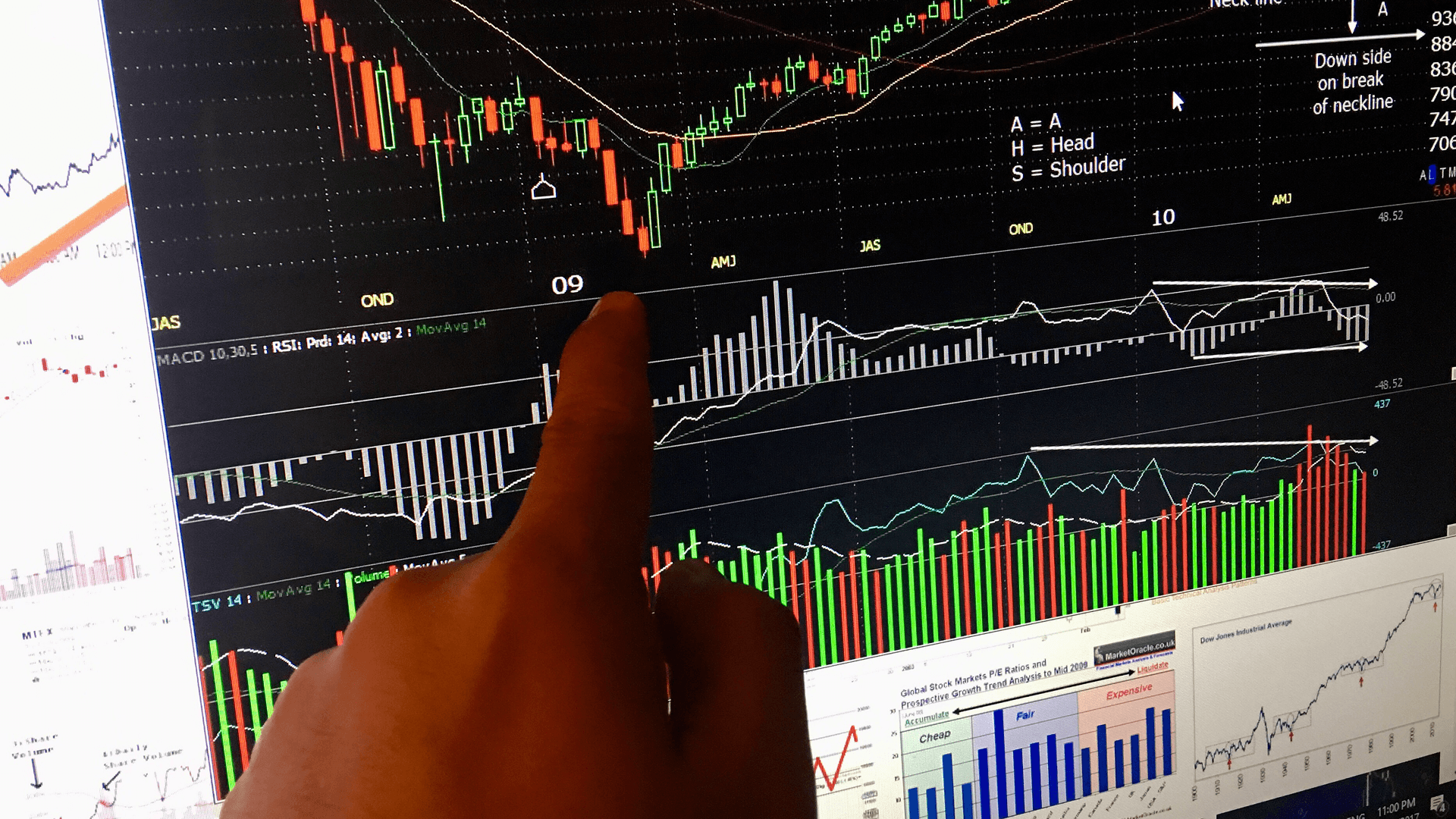
Using the Peaks and Troughs Analysis in Your Trading Strategy
Prices rise, reverse, fall and reverse again, forming peaks and troughs. These ups and downs are the pulse of the financial markets, creating opportunities for traders. The key is to understand the structure behind each move. With its origins in the Dow theory on the markets, the peak-and-trough analysis technique helps traders do just that.
What are Peaks and Troughs?
Peaks are the high points where the price rises and stalls before it starts falling again. A trough is a low point to which the price drops before it starts to rise again.
Valid peaks and troughs occur when the price reaches a new high or low within a move, or when a counter-move against the prevailing trend retraces roughly one-third to two-thirds of the prior price movement.
Peaks and troughs offer several types of insights into market movements, such as:
- Whether bulls or bears are in control.
- Is the market momentum steady or fading?
- What are the natural support and resistance levels?
Determining Market Trends
Peak and trough analysis helps determine the ongoing market trend.
Uptrend
When each new peak and trough is higher than the previous peak and trough, respectively, the market is considered to be trending up. In this case, buyers are in control. The steeper the peak/trough, the greater the momentum. Shallow or flatlining peaks usually indicate declining market momentum.
Downtrend
In a downtrend, lower and lower peaks and troughs form consecutively. This indicates that sellers are in control of the market.
Ranging
In ranging markets, consecutive peaks and troughs form at roughly the same level. The price line moves horizontally, signalling indecision in the market.
Identifying Potential Reversals
Another popular use of peak-and-trough analysis is to get early signals of a potential reversal.
Uptrend Reversal
When the height (the difference in price level) of consecutive peaks starts to decline or lower troughs form, traders can start looking for signs of a reversal.
Downtrend Reversal
When the price forms higher lows and higher highs, traders consider it a signal of weakening bear strength.
Gauging Market Momentum
Understanding momentum is critical to determining how long you can ride the current trend, or whether it is weakening and it is time to switch from a trend trading strategy to a reversal trading one. Here’s how you can determine the strength of the trend:
During a strong uptrend, peaks and troughs are farther apart (greater difference in price highs and lows). The pullbacks are shallow, and the price slope increases during breakouts. When an uptrend weakens, peaks stop rising as fast. Troughs may become uneven and often deeper. The opposite occurs during a downtrend.
Deciding Entry and Exit Points with Peak-and-Trough Analysis
During an uptrend, a higher trough indicates a price pullback. Traders consider opening long positions at this point. Additionally, a high-momentum breakout above a previous peak suggests a price upswing, which is also considered a signal to buy.
During a downtrend, a lower peak or a breakdown below the previous trough are considered selling points.
Risk management is also quite intuitive with peak-and-trough analysis. The previous peak is considered a support level in an uptrend. Similarly, the previous trough is regarded as the support level during a downtrend. These are used for setting stop loss levels.
Combining Peak-and-Trough Analysis with Other Indicators
Being based on pure price action, peak-and-trough analysis generates early signals. But it is also prone to false signals. This means confirming the signals with other indicators is important.
Combining with Moving Averages (MA)
In an uptrend, the price often pulls back to a key moving average, such as the 50-day or 200-day MA. This line then acts as a dynamic support level. Traders tend to buy near the trough if it aligns with the MA. When an uptrend fades, a trough below the 200-day MA is used to confirm the reversal.
Using MACD/RSI in Peak-and-Trough Analysis
MACD and RSI are oscillating indicators. They show divergences between price action and broader market sentiment. For instance, when the price makes a higher peak, but the indicator (RSI/MACD) makes a lower peak, it indicates that bullish momentum is fading and a reversal may be on the horizon.
Volume with Peak-and-Trough Analysis
Volume indicators, such as OBV, are often used in peak-and-trough analysis. During an uptrend, in ideal situations, volume should increase as a new peak is formed and remain low during a pullback. This confirms that the market is committed to the direction. When the price breaks out of a consolidation with high volume, it signals a strong upswing. But when the volume is low, it is considered a fake-out. Additionally, when volume suddenly rises with a sharp uptick in price, traders consider it as an exhaustion signal and prepare their reversal strategies.
Summary
- Peak-and-trough analysis is a visual method for assessing market trends.
- It helps identify the current market direction and speculate on reversals.
- The method relies on observing highs (peaks) and lows (troughs) in price movements.
- This technique can be used to determine market trends, get early signals for reversal, determine entry and exit points, and gauge market momentum.
- Traders often combine peak-and-trough analysis with technical indicators, such as RSI, MA, OBV, etc., to confirm signals and make informed decisions.
Frequently Asked Questions
1. What are peaks and troughs in trading? Peaks are high points where price reverses downward, while troughs are low points where price reverses upward.
2. How do peaks and troughs help identify trends? Higher highs and higher lows indicate an uptrend, while lower highs and lower lows signal a downtrend.
3. Can peak-and-trough analysis predict reversals? Yes. Changes in the structure, like lower highs in an uptrend or higher lows in a downtrend, can signal weakening momentum and potential reversals.
4. Should this method be used alone? No. It is best combined with indicators like RSI, MACD, moving averages, and volume tools to confirm signals and reduce false entries.
Disclaimer:
All information is provided for general informational purposes only and does not constitute investment advice or a recommendation. It does not consider your individual financial situation or objectives. You should seek independent financial advice before making any investment decisions.
While efforts are made to ensure accuracy, no guarantee is given regarding completeness or reliability, and information may change without notice. Past performance is not indicative of future results. Blackwell Global accepts no liability for any losses arising from reliance on this information.